

Young people thinking carefully about intelligent technology
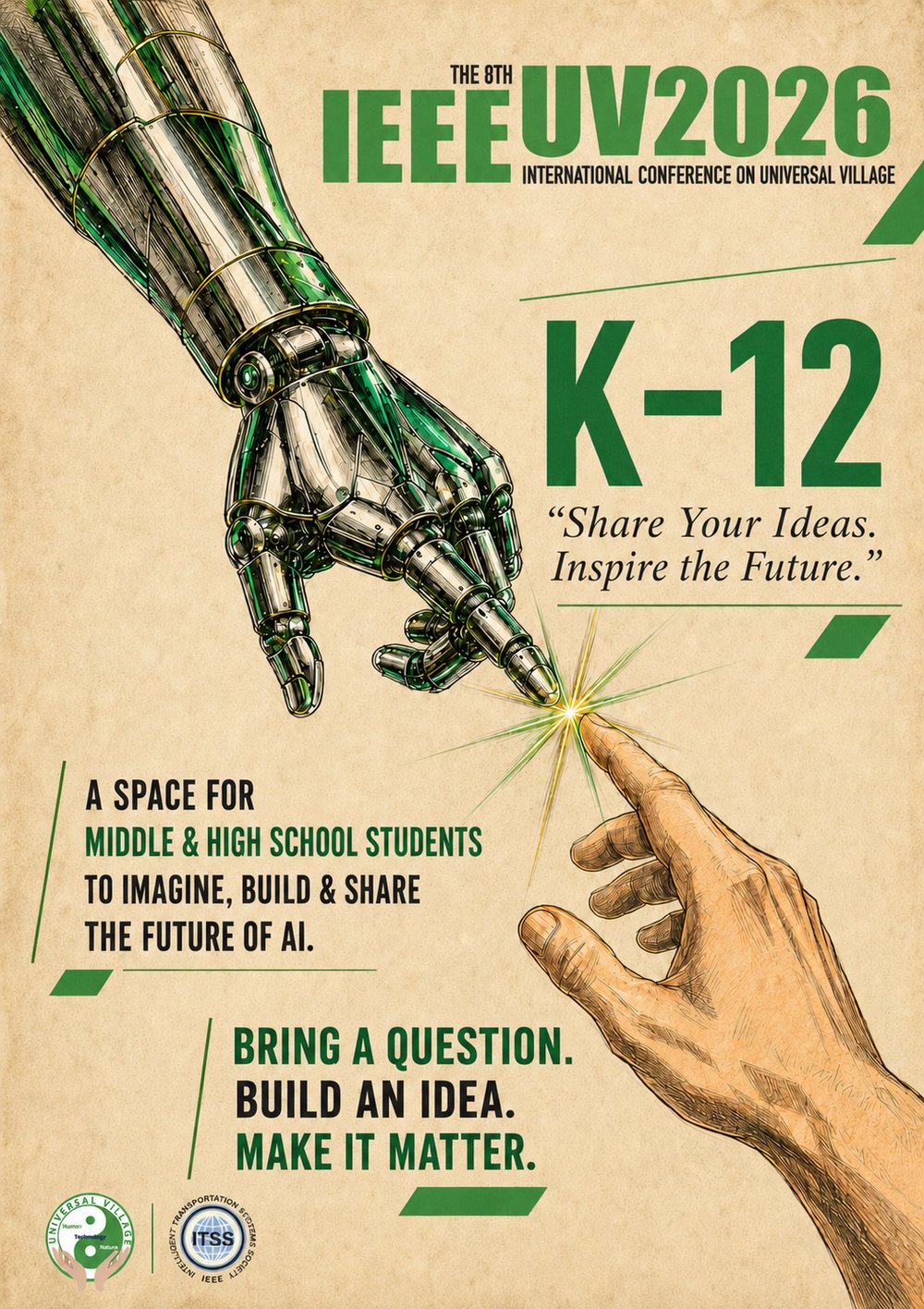
K–12 program for developing ideas, exchanging viewpoints, sharing work, and learning together.
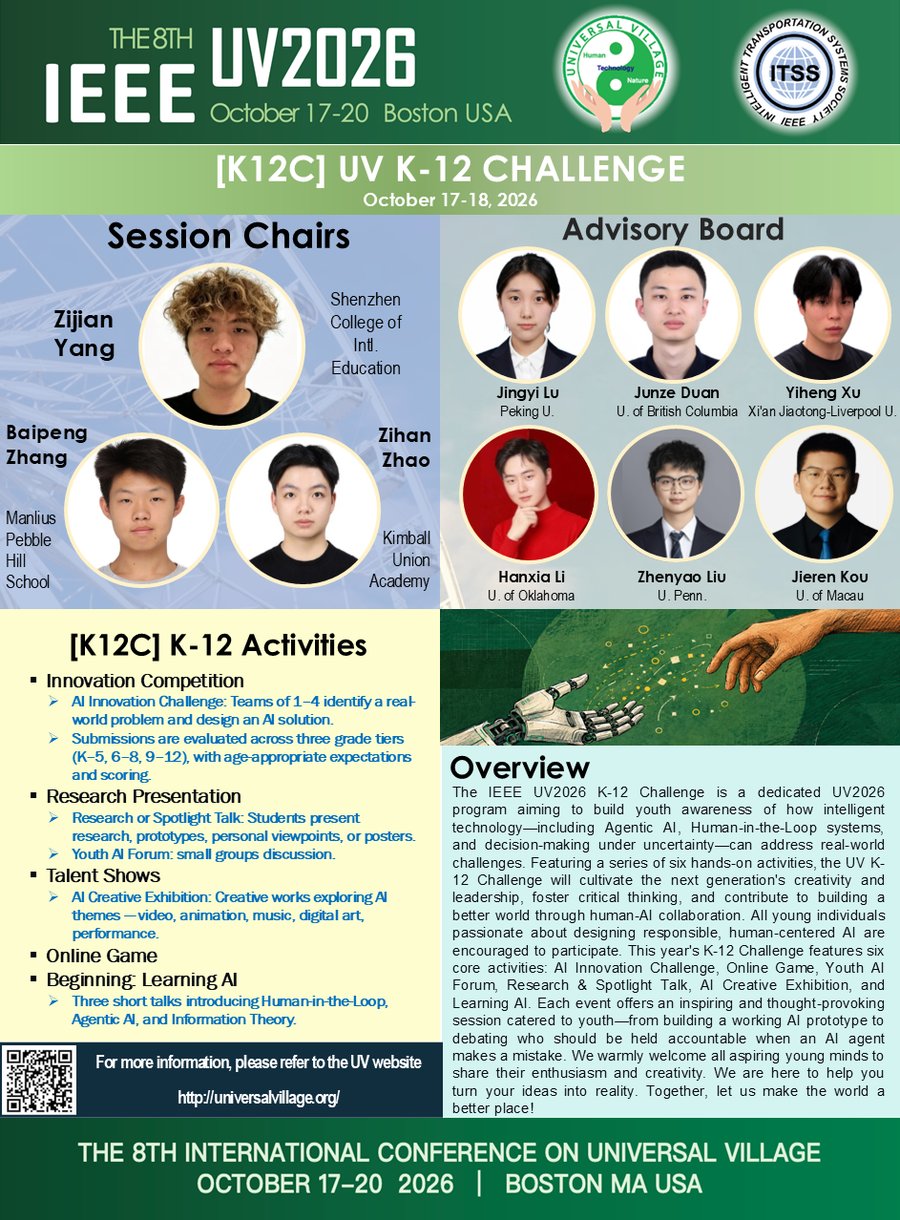
The UV2026 K–12 Challenge brings young students together to explore how AI can support people and communities. Participants can develop projects, exchange viewpoints, share early research, create original work, and learn from speakers and one another.
Understand the system—and the human role
- 01
Human-in-the-Loop
When people should review, correct, approve, or stop an AI system.
- 02
Agentic AI
How AI agents set goals, make plans, use tools, and take actions.
- 03
Information Theory
How limited, noisy, or uncertain information changes AI decisions.
Activities
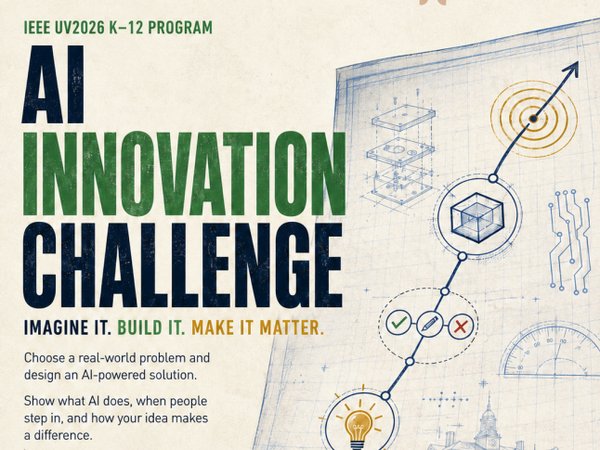 AI Innovation ChallengeDevelop an AI solution, individually or in a team of 2–4.
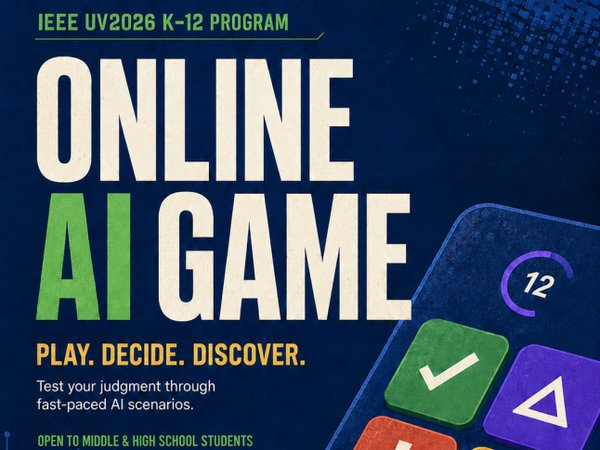 Online GameA fun, interactive AI quiz for all participants.
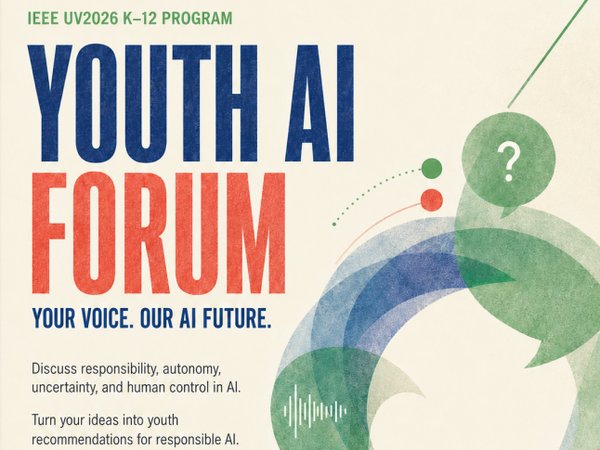 Youth AI ForumDiscuss AI, responsibility, autonomy, and uncertainty.
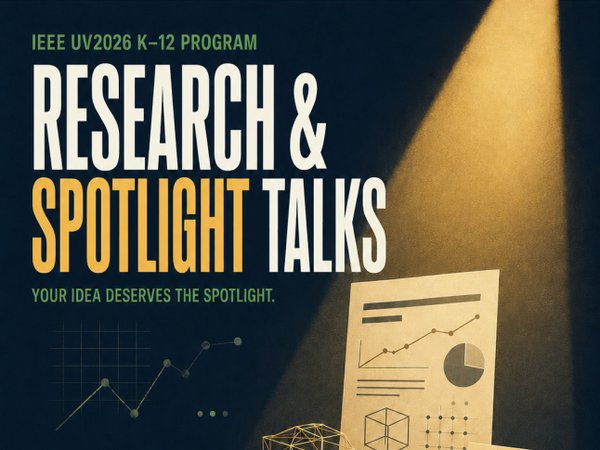 Research or Spotlight TalkShare research, a prototype, a poster, or a viewpoint.
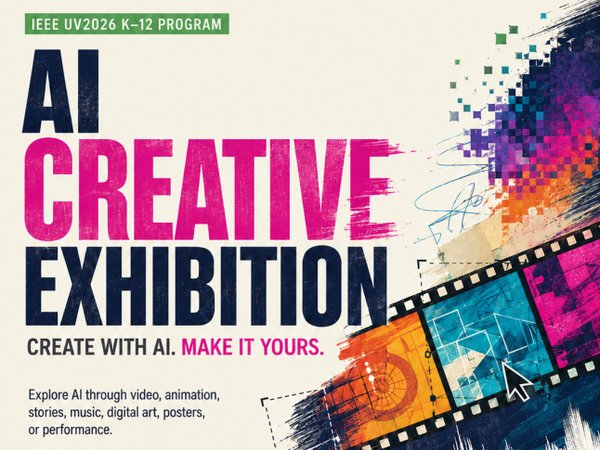 AI Creative ExhibitionShow videos, art, music, stories, and more made with AI.
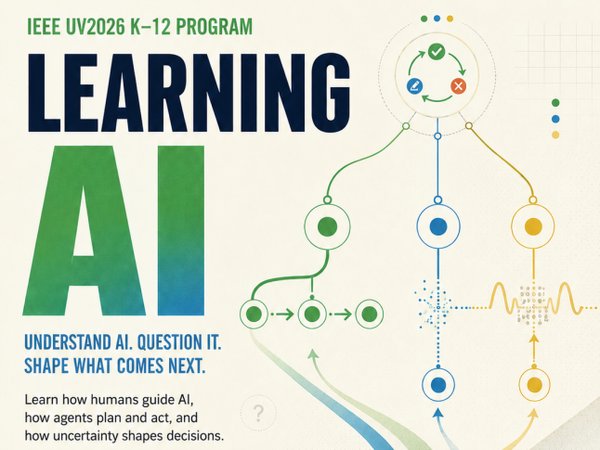 Learning AIAn introductory workshop — no AI knowledge needed.
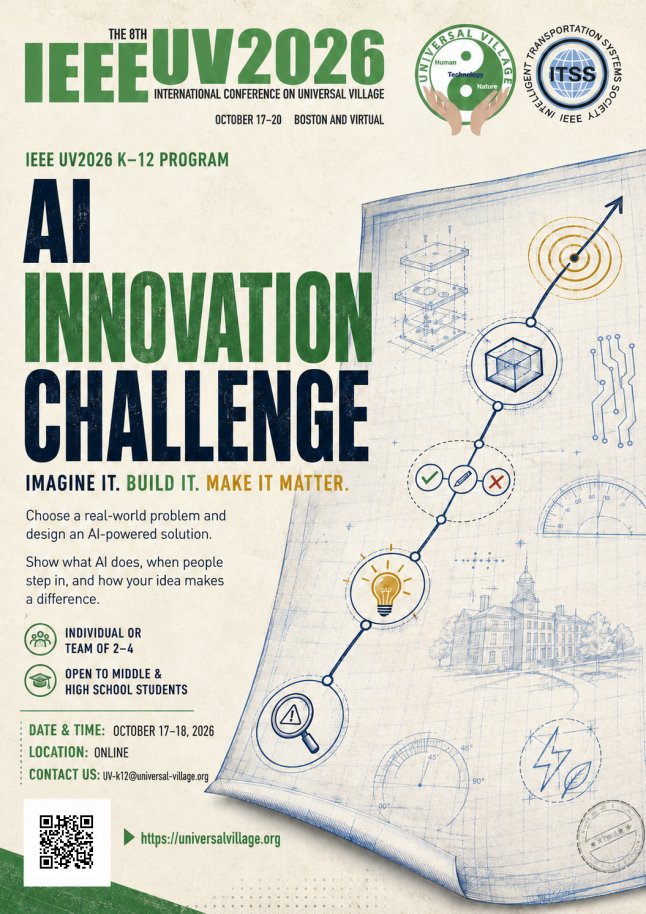
AI Innovation Challenge
The AI Innovation Challenge invites students to develop innovative solutions to real-world problems related to Agentic AI, Human-in-the-Loop systems, or Information Theory. Participants may compete individually or in teams of 2–4 students.
The Challenge is organized into three grade-based tiers:
- Tier A — Grades K–5Students should choose one real AI example they have encountered, explain what decision the AI is making, and identify one situation in which an adult or responsible human should step in and why.
- Tier B — Grades 6–8Students should choose a real, existing AI product or system, identify who uses it and what the AI decides, and describe its decision process in 3–5 clear steps. They should identify at least one point where the AI must hand the decision to a human. If Information Theory is relevant, students should also explain what information the AI may lack and how it responds.
- Tier C — Grades 9–12Students should choose a real or well-documented AI application and clearly define who is involved, what decision the AI makes, and which challenge theme applies. They should specify what the AI can decide independently, what must be handed to a human, and who receives that handoff. Where relevant, students should also describe the AI agent’s goal and available actions, explain how missing or uncertain information affects its output, and identify at least one known limitation.
Projects should demonstrate a clear and meaningful connection to at least one of the three challenge themes. The depth and complexity of the proposed solution should be appropriate to the participant’s tier.
Selected teams will be invited to present their projects, explain their design choices, and discuss how their AI system would operate in a real-world setting.
Before the conference, participants should submit a 300-word abstract, a project framework, and a PowerPoint or PDF presentation. A demo, simulation, mockup, or recorded demonstration is optional. Students may submit one if available, but it is not required. Please also explain which AI tools and references were used.
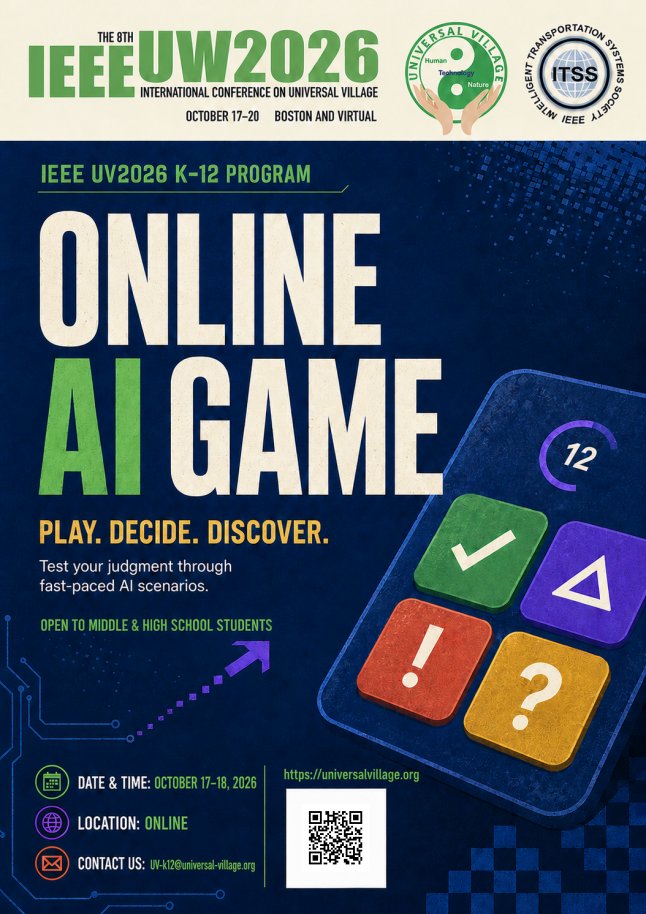
Online Game
The Online AI Game is a fun and interactive session for all participants. Students will answer questions about AI agents, human supervision, AI safety, and decision-making with limited information.
The game will consist of one round with both multiple-choice and open-ended questions. The host will briefly explain the reasoning behind each answer. No previous AI knowledge or advance submission is required.
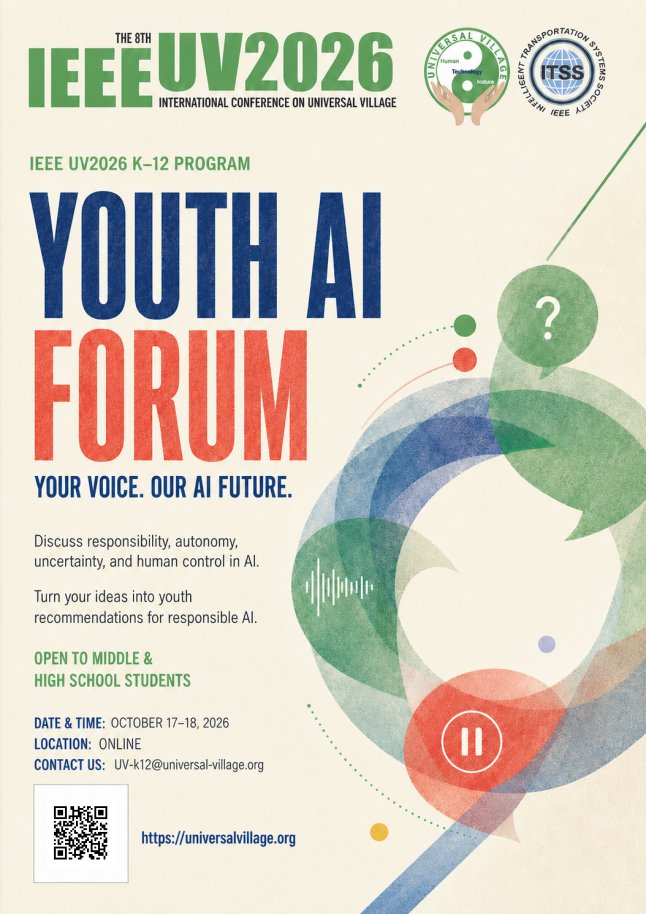
Youth AI Forum
The Youth AI Forum is an open-ended discussion about AI, responsibility, autonomy, and uncertainty. Students will discuss questions such as whether AI should act without human approval and who should be responsible when an AI system causes harm.
The moderator will first introduce the discussion topics. Students will then discuss them in small groups, and each group will give a short summary of its main ideas. The session will end with open questions, audience discussion, and voting.

Research or Spotlight Talk
The Research or Spotlight Talk gives students an opportunity to share an AI research project, an early prototype, a poster, or a personal viewpoint. The project does not need to be completed. Students are welcome to present an idea, question, or real-world concern related to AI.
Before the conference, participants should submit an abstract, a PowerPoint, PDF, or poster, and a short list of references. Please also explain which AI tools were used. Each participant will give a short presentation followed by questions or feedback.

AI Creative Exhibition
The AI Creative Exhibition allows students to explore AI through creative work. Participants may submit videos, animations, stories, music, digital art, posters, interactive projects, or short performances. Visitors will be able to view the works, meet the creators, and vote for the People’s Choice Award.
Before the conference, participants should submit their creative work and a 100–150-word introduction. Please explain what was created by the student, what was created with AI, and which tools or sources were used.
Learning AI
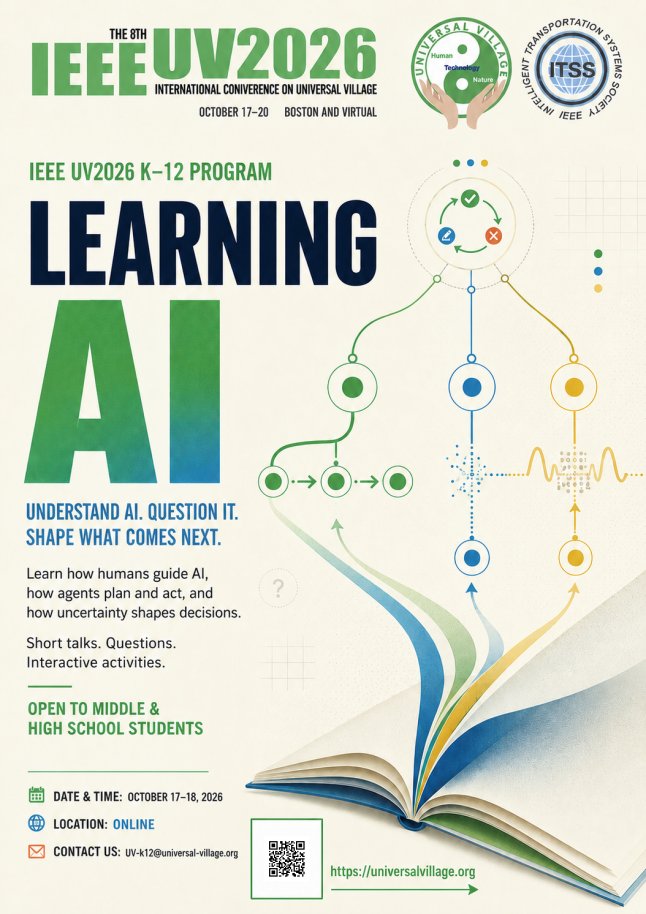
Learning AI is an introductory workshop about Human-in-the-Loop, Agentic AI, and Information Theory. Speakers will explain how people can guide AI, how AI agents plan and act, and how limited or uncertain information affects AI decisions.
No previous AI knowledge is required. Participants will listen to short presentations, answer questions, and take part in simple activities. This session can also help students prepare for the other UV2026 K–12 activities.
Important Information & Submission
Dates, setting, submission preparation, and K–12 contact information.
- Participant grade
- K–12
- Session dates
- October 17–18, 2026
- Setting
- Local & Virtual
- Language
- English
September 25, 2026
- Presentation abstracts due
- Final presentation materials due
Prepare your final materials
Submit your abstract and final presentation materials before September 25, 2026.
Submit worksUse the K–12 contact below if you need submission guidance.
- Website:
- https://universalvillage.org
Submission Template
Required structure for Tier A, Tier B, and Tier C project submissions.
Templates by Tier for AI Innovation Challenge
Tier A participants submit the short project description below. Tier B and Tier C participants submit both the Abstract and Project Framework.
One-Paragraph Template
Tier A participants submit one short paragraph in place of both the Abstract and Project Framework. The paragraph should address all four prompts below.
- AI System or Application — Identify one real AI system, product, or feature you have personally encountered or used.
- AI Decision — State what decision, recommendation, or action the AI is making.
- Human-Handoff Point — Identify one moment when an adult or responsible human should become involved.
- Reason for Human Involvement — Explain why the AI should not make that decision alone.
Project Overview
- Problem — Describe the real-world problem and explain why it matters.Recommended: 2–3 sentences.
- Connection to Challenge Theme(s) — Identify Agentic AI, Human-in-the-Loop, and/or Information Theory, and explain how the selected theme is reflected in the project.Recommended: 2–3 sentences.
- High-Level AI Approach — Explain in clear, accessible language what information the AI receives, what it decides or does, and what outcome it is intended to produce.Recommended: 3–4 sentences.
- Tools and References — List relevant AI tools, datasets, papers, articles, existing systems, or other sources. Cite external sources where appropriate.Recommended: 1–2 sentences.
How the System Works
- Problem Statement — Define the specific problem the project is designed to address.
- Users and Stakeholders — Identify who would use, supervise, benefit from, or be affected by the system.
- AI Approach — Explain in plain language what the AI observes, analyzes, decides, recommends, or acts on.
- AI Action Boundary — State what the AI may decide or do independently and what falls outside its authority.
- Human-Handoff Point(s) — State exactly when the AI must stop, escalate, or transfer responsibility; identify who receives the handoff and why human judgment is required.
- Uncertainty and Missing Information — Explain what the system may not know or cannot reliably observe, and how it responds when information is incomplete, conflicting, or uncertain.
- Known Limitations — Identify at least one realistic limitation, risk, failure mode, or situation in which the system may not perform reliably.
Tier-Specific Expectations
What students should demonstrate at each participation tier.
Choose the Level That Matches Your Project
The requirements increase in depth from Tier A to Tier C. Projects should still remain clear, realistic, and explicitly connected to the challenge themes.
One-Paragraph Submission
Tier A participants submit one short paragraph in place of both the Abstract and Project Framework.
- Real AI Example — Choose one AI example the student has personally encountered or used.
- AI Decision — Explain what decision, recommendation, or action the AI is making.
- Human Involvement — Identify one moment when an adult or responsible human should become involved and explain why the AI should not make that decision alone.
Analyze an Existing AI System
Tier B projects should focus on understanding and analyzing a real, existing AI product or system.
- Users + Decision — State who uses the system and what decision, recommendation, or action the AI produces.
- Decision Process — Describe the process clearly, ideally as a short 3–5 step flow.
- Human Handoff — Mark at least one point where the decision must go to a human, and explain who receives it and why.
- Information Gaps — Where relevant, explain what information the AI lacks or is uncertain about and how it responds.
- Theme Connection — Show a clear connection to at least one challenge theme.
Design and Defend a Well-Documented AI Application
Tier C projects should provide a more detailed, structured analysis of a real or well-documented AI application and cite at least one reliable source.
- Core Scenario — Clearly identify who uses or is affected by the system, what decision or action the AI makes, and which challenge theme(s) apply.
- Action Boundary + Human Handoff — State what the AI can decide alone, what must go to a human, who receives the handoff, and why.
- Uncertainty + Limitations — Explain missing, noisy, incomplete, or uncertain information; how output or behavior adjusts; and at least one known limitation or failure mode.
- If Agentic AI Applies — Describe the agent’s goal, available action set, step sequence, and any actions requiring human approval.
- If Human-in-the-Loop Applies — Explain when and why intervention occurs, who the human decision-maker is, and what information is provided for that decision.
- If Information Theory Applies — Describe what information is missing or uncertain and how the system changes its confidence, output, or behavior in response.
- Presentation Readiness — Be prepared to answer judges’ follow-up questions about system design, limitations, uncertainty, safety, and real-world use.
