


UV2024 Student Forum
Boston and Virtual
Forum Aims & Scope
Universal Village (UV) is a new concept proposed by MIT’s UV program in 2012. UV exemplifies an ideal future society that addresses the challenges arising from urban development and pursues harmony between humans and nature through the wise use of technologies.
In response to the calling of UV International Conferences, UV Student Forum has been founded to raise awareness among the young generation about the challenges and dilemmas humanity is facing, foster their creativity and leadership, encourage entrepreneurial enthusiasm, and contribute to building a better world.
UV Student Forum follow IEEE UV2024’s theme of “Reflections on the Human-AI Relationship and AI-Pervasive Societal Transformation: Human-centricity, Explainable AI, and Intent & Behavior Understanding for Integration, Resilience, Inclusiveness, and Sustainability.”
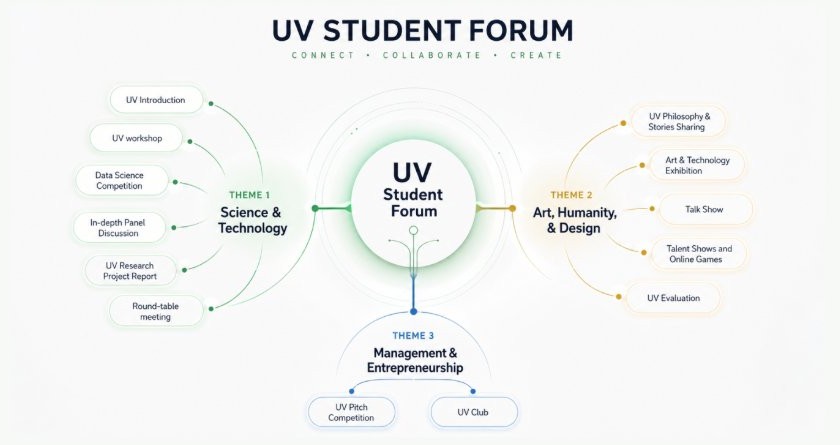
In this session, participants have the opportunity to share their research, designs, experiences, and visions with peers, host round-table discussions, propose future plans for UV student clubs, and participate in interactive activities. Specifically, UV2024 Student Forum will feature the following events:
Forum Speakers
UV Student Forum featured speakers will include
- (1) Students who will introduce their ongoing research and provide an overview of current technologies,
- (2) Student representatives from different vulnerable groups and communities who will share their stories and special needs,
- (3) Student innovators who will share their visionary world-changing ideas,
- (4) Student leaders of different communities who share a common mission to promote human-nature harmony.
Forum Content: AI Hallucination Challenge
UV2024 Student Forum focused on AI hallucination as a critical issue that must be addressed to develop safe, trustworthy, and human-centered AI systems. This issue has moved beyond technical discussions within AI research and has become a broader concern for society.
Cambridge Dictionary added an AI-specific definition of “hallucinate”, and selected it as its Word of the Year
Hallucinated responses in a Stanford legal-domain study
Air Canada ordered to pay CAD 812.02 after its chatbot provided a false discount
Recent research has increasingly focused on the mitigation, detection, and evaluation of AI hallucination, yet the problem remains conceptually and methodologically unsettled.
To examine this issue systematically, the forum organized its discussion around five focus areas:
Five Focus Areas
Definition and Conceptual Reframing
This area addresses the conceptual ambiguity surrounding AI hallucination, examines how the term has been defined across recent literature and proposes a lifecycle-based definition linking observable manifestations with generative mechanisms.
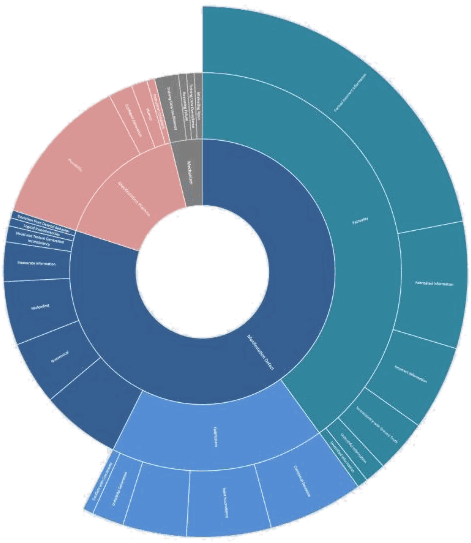
Source: UV2024 Student Forum article, Reframing Hallucination in Large Language Models: A Lifecycle-Based, Mechanism-Aligned, and Phenomenon-Consistent Definition.
Manifestations and Mechanisms
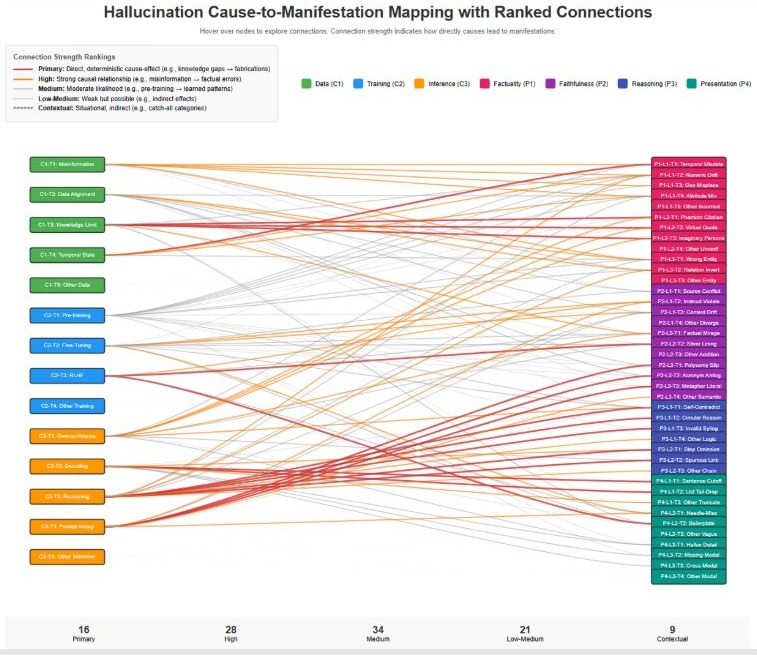
This area explores how hallucinations appear in model outputs and traces their potential mechanisms across data, training, fine-tuning, and inference stages.
Mitigation Strategies
This area maps hallucination mitigation as a system-level challenge and reviews current strategies for reducing or managing hallucination, including detection-based workflows, retrieval-augmented methods, prompting strategies, verification mechanisms, and lifecycle-based interventions.
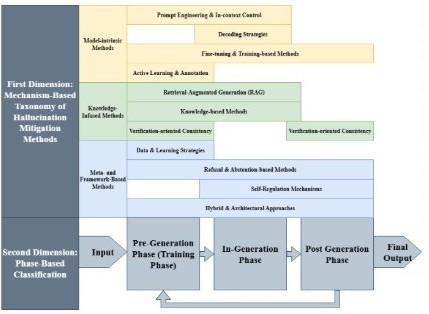
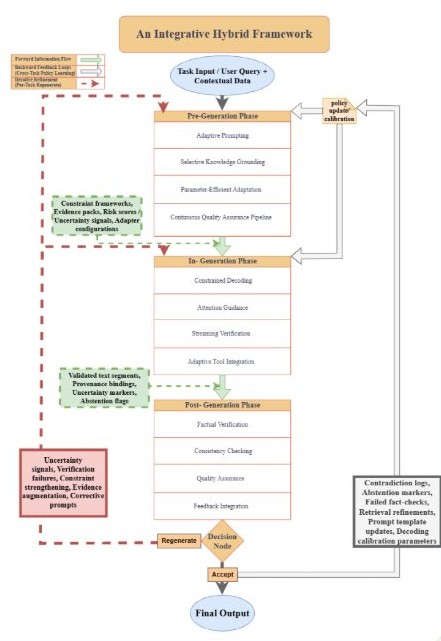
Source: UV2024 Student Forum article, Beyond Isolated Fixes: A Comprehensive Survey on Hallucination Mitigation with a Three-Dimensional Taxonomy and Integrative Framework.
Evaluation and Benchmarking
This area examines how hallucinations are detected, measured, and compared across models, tasks, domains, and modalities, highlighting the need for diagnostic, adaptive, and mechanism-aware evaluation.
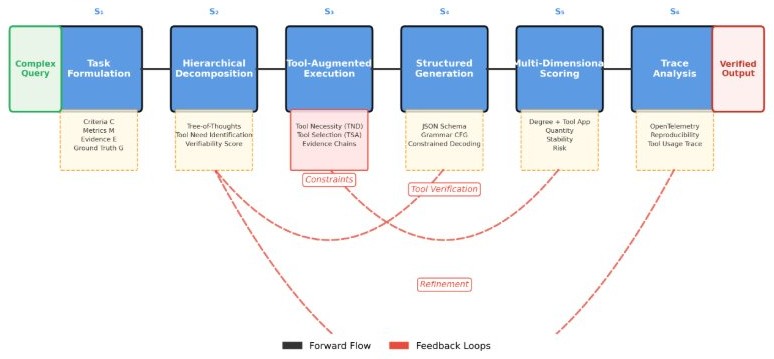
Source: UV2024 Student Forum article, LENS: Layers of Evaluation of Hallucination in GenAI Systems.
Comprehensive Survey and UV-Oriented Trustworthy AI Framework
This area synthesizes the conceptual, mechanistic, evaluative, and mitigation-oriented discussions into a broader UV-oriented framework for safe, trustworthy, and human-centered AI.
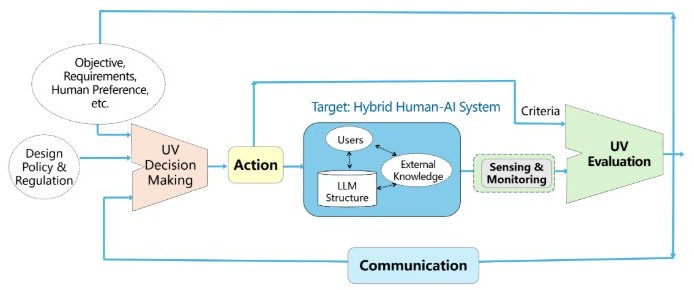
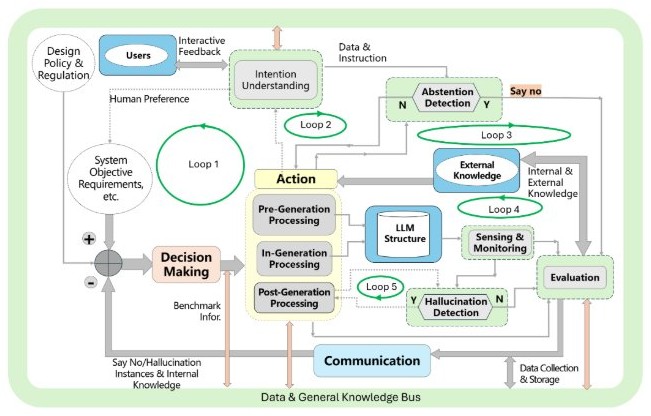
Source: UV2024 Student Forum article, Comprehensive Evaluation of AI Hallucination and Novel UV-Oriented Framework toward Safe and Trustworthy AI.
Featured Student Research Articles
[1] Reframing Hallucination in Large Language Models: A Lifecycle-Based, Mechanism-Aligned, and Phenomenon-Consistent Definition
Abstract preview available in expandable sectionRead AbstractHide Abstract
Abstract – Reframing Hallucination in Large Language Models: A Lifecycle-Based, Mechanism-Aligned, and Phenomenon-Consistent Definition
While recent advances in Large Language Models’ reasoning capabilities have improved their performance across many tasks, the fundamental challenge of hallucination, a form of unexpected generation, persists. Researchers are already attempting to develop methods to detect and mitigate hallucination, even though the term itself lacks a unified definition and is applied inconsistently across the literature. This incongruity underscores the need for a clear and conceptually grounded definition, which is the prerequisite for pursuing effective solutions. We reviewed 76 definitions of hallucination from AI-related literature published between 2023 and 2025. Our analysis revealed substantial overlaps and ambiguities in the definitional boundaries between hallucination and other related concepts, leading to inconsistent usage across the literature. The current definitional vocabulary also remains largely focused on observable properties, such as factuality and faithfulness, rather than the underlying mechanisms that give rise to these outputs. To address these limitations, we propose a Lifecycle-Based, Mechanism-Aligned, and Phenomenon-Consistent definition of hallucination that integrates both the generative mechanisms and their observable manifestations across the stages of data collection, processing, and quality assurance, through model development, to deployment. This reframed definition provides a conceptually coherent foundation for hallucination evaluation and mitigation, offering future guidance for developing benchmarks, designing diagnostic tools, and implementing mitigation strategies.
[2] Hallucination in Large Language Models: From Mechanistic Understanding to Novel Control Frameworks
Abstract preview available in expandable sectionRead AbstractHide Abstract
Abstract – Hallucination in Large Language Models: From Mechanistic Understanding to Novel Control Frameworks
Hallucination in large language models (LLMs) represents a fundamental challenge that extends beyond technical failure to reveal the mathematical inevitability of uncertainty in probabilistic language generation. This comprehensive survey presents the first unified mechanistic framework that systematically maps causal pathways from internal mechanisms to observable manifestations. We introduce a hierarchical taxonomy organizing hallucinations into four manifestation categories (P1: factuality errors, P2: faithfulness violations, P3: logical inconsistencies, P4: emergent behaviors) and trace their origins to three mechanistic sources (C1: data artifacts, C2: training biases, C3: inference failures). Our analysis reveals the dual nature of hallucination, simultaneously representing creative potential and factual unreliability, which challenges assumptions about complete elimination. We present seven novel frameworks for mechanism-aware hallucination management: HALO-M for layer-wise diagnostic analysis, KOQF for quantifying knowledge overshadowing effects, MIT for targeted mechanistic interventions, DPHCS for dual-process adaptive generation, HABS for comprehensive benchmarking, NSHPA for neuro-symbolic verification, and HACHMS for human-AI collaborative management. Through systematic task decomposition and compositional verification, these frameworks enable precise identification and mitigation of hallucination at its source. By establishing hallucination as an emergent property to be understood and managed rather than suppressed, we provide both theoretical foundations and practical tools for developing AI systems that balance creative capability with factual reliability, ultimately reframing the hallucination challenge from an obstacle to an opportunity for advancing artificial intelligence aligned with human values.
[3] Beyond Isolated Fixes: A Comprehensive Survey on Hallucination Mitigation with a Three-Dimensional Taxonomy and Integrative Framework
Abstract preview available in expandable sectionRead AbstractHide Abstract
Abstract – Beyond Isolated Fixes: A Comprehensive Survey on Hallucination Mitigation with a Three-Dimensional Taxonomy and Integrative Framework
Hallucinations in large language and vision–language models constitute a persistent and systemic failure mode that fundamentally undermines their reliability in high-stakes applications. Rather than framing hallucination as a localized generation error, this paper reconceptualizes it as a lifecycle phenomenon—emerging from upstream deficiencies in data collection, reinforced by training-time biases, and exacerbated by inference-time decoding pathologies. To address this challenge, we propose a unified framework for hallucination mitigation grounded in a structured three-dimensional taxonomy that spans mechanism-based strategies, phase-specific interventions, and cross-phase integrative approaches. This taxonomy elucidates how technical solutions, knowledge-enhanced methods, and framework-level designs can be systematically orchestrated across pre-, in-, and post-generation stages to support more robust, interpretable, and auditable model behavior. Within this paradigm, detection is positioned not as a terminal task, but as a diagnostic backbone that enables adaptive and multi-stage mitigation workflows. Building on this foundation, we introduce an integrative hybrid framework that consolidates previously fragmented techniques into coherent pipelines, demonstrating how cross-phase synergy and iterative refinement can enhance reliability in real-world deployment. This framework further reveals latent connections across diverse strands of research, facilitating the identification of underexplored intersections and the development of synergistic method combinations. By reframing hallucination mitigation as a system-level challenge rather than a set of isolated fixes, this work offers both a theoretical lens and a practical roadmap for advancing the trustworthiness of generative AI systems.
[4] LENS: Layers of Evaluation of Hallucination in GenAI Systems
Abstract preview available in expandable sectionRead AbstractHide Abstract
Abstract – LENS: Layers of Evaluation of Hallucination in GenAI Systems
Large Language Models (LLMs) and Vision-Language Models (VLMs) demonstrate remarkable capabilities but remain vulnerable to hallucinations—producing plausible yet factually incorrect content—with error rates ranging from as low as 1.47% in clinical applications [1] to as high as 75% in domain-specific queries [2]. Despite growing attention, existing hallucination evaluation frameworks remain insufficient to meet critical needs. Through a comprehensive survey of over 100 evaluation methods spanning six methodological paradigms (probe-based, adversarial testing, causal intervention, uncertainty-guided, internal state analysis, and online evaluation), we identify fundamental limitations: current approaches fall short of enabling objective model comparison, providing diagnostic insights into failure modes, supporting domain-evolving benchmark construction, and guiding targeted mitigation strategies. Our analysis reveals that evaluations remain fragmented, operating either horizontally—comparing models across tasks and domains—or vertically—probing reasoning chains within single outputs. This fragmentation limits holistic assessment: horizontal evaluations provide breadth but risk superficiality, while vertical assessments deliver depth but lack generalizability. Moreover, we identify five critical gaps: (1) dimensional poverty reducing hallucinations to binary metrics, (2) failure to integrate horizontal breadth with vertical depth, (3) metacognitive blind spots overlooking when models should seek external verification, (4) adaptability crisis from static benchmarks, and (5) transparency deficits providing scores without actionable insights. Beyond surveying the landscape, this paper articulates eight fundamental challenges confronting comprehensive evaluation—from epistemological difficulties in defining ground truth and computational complexity of scaling assessment, to attribution opacity obscuring causal mechanisms and dynamic knowledge evolution rendering benchmark…
[5] Comprehensive Evaluation of AI Hallucination and Novel UV-Oriented Framework toward Safe and Trustworthy AI
Abstract preview available in expandable sectionRead AbstractHide Abstract
Abstract – Comprehensive Evaluation of AI Hallucination and Novel UV-Oriented Framework toward Safe and Trustworthy AI
This article presents a comprehensive evaluation of hallucination phenomena in large language models and multimodal AI systems. First, we propose a structured taxonomy encompassing factuality-based, faithfulness-based, logical-based, and emergent hybrid forms, extending to multimodal-specific risks such as cross-modal inconsistencies, visual overinterpretation, and modality dominance effects. Second, we conduct a mechanistic analysis that traces hallucinations across the full model lifecycle—data-level origins (knowledge gaps, misinformation, annotation noise), training-induced mechanisms (distributional mimicry, reward bias, alignment forgetting), and inference-time vulnerabilities (confidence miscalibration, decoding failures, prompt-induced errors). This perspective reveals how independent mechanisms interact to produce cascade effects, amplifying initial flaws into elaborate but unreliable narratives. Third, we critically assess existing detection and evaluation approaches, highlighting limitations of current benchmarks, taxonomic ambiguities, and the lack of mechanism-aware evaluation protocols. We argue that future evaluation must integrate both surface-level manifestations and their generative causes to achieve more robust measurement. Beyond evaluation, we survey mitigation strategies organized into mechanism-based, phase-based, and hybrid approaches. These range from lightweight prompt engineering and decoding constraints to resource-augmented methods such as retrieval-augmented generation and knowledge graph integration, as well as higher-level frameworks for controllability and uncertainty calibration. We analyze the trade-offs among effectiveness, scalability, interpretability, and creative freedom, emphasizing the importance of context-specific tolerances: hallucinations that are unacceptable in medicine or finance may be tolerable, or even beneficial, in creative applications. Building on these insights, we propose a novel UV-oriented framework for safe and trustworthy AI, …
Join Us
UV Student Forum sincerely welcomes your participation and ideas.
Proposed, hosted, and organized by students and supported by the International Society of Universal Village, the UV Student Forum serves as a valuable platform that encourages the young generation to contemplate the future of the human race, to work together to find solutions for imminent problems, and to achieve sustainable happiness through wise use of technologies.
Instructions for Student Forum Presentation Submissions
UV2024 Student Forum follows the theme of IEEE UV2024. Students and young researchers are invited to submit forum contributions that connect their research, design, or applied projects with the UV2024 theme.
All applicants are expected to submit presentation abstracts and presentation materials for the Student Forum session.
Please follow the instructions in “Instructions for Paper Submission” to create an EasyChair account and make a new submission to the system.
Submission Checklist
- One-page presentation abstract (200–300 words)
- Presentation materials (20–25 PowerPoint/PDF slides or other approved formats)
- Select [SF] UV Student Forum under UV Forum when selecting Topics
- Select UV PANEL / UV FORUM / UV WORKSHOP as the Category of your submission files
- At least one author of an accepted submission must register and present
Important Dates
- Presentation abstracts due
- Notification of abstract acceptance
- Final presentation materials due
Contact Us
For questions about IEEE UV2024, submissions, or participation opportunities, please contact the UV Student Forum committee.
uv.student.forum@universal-village.org